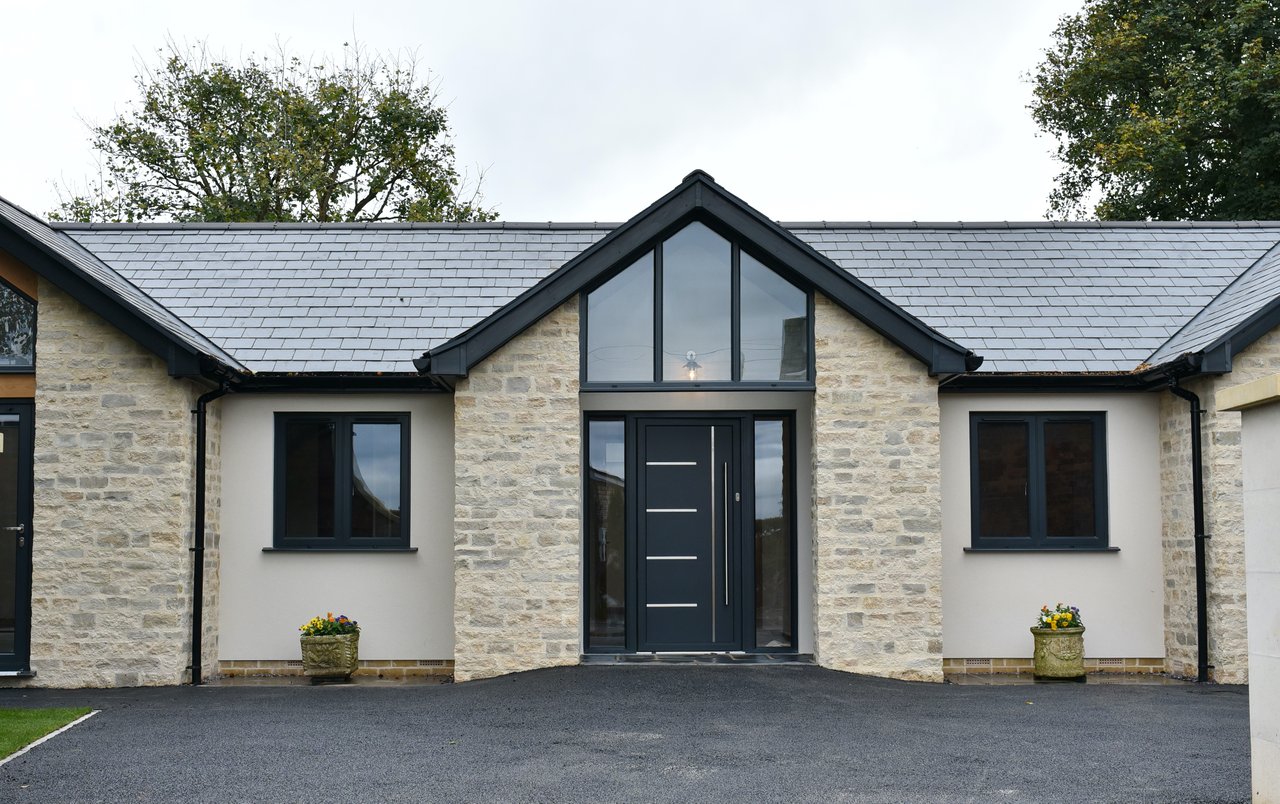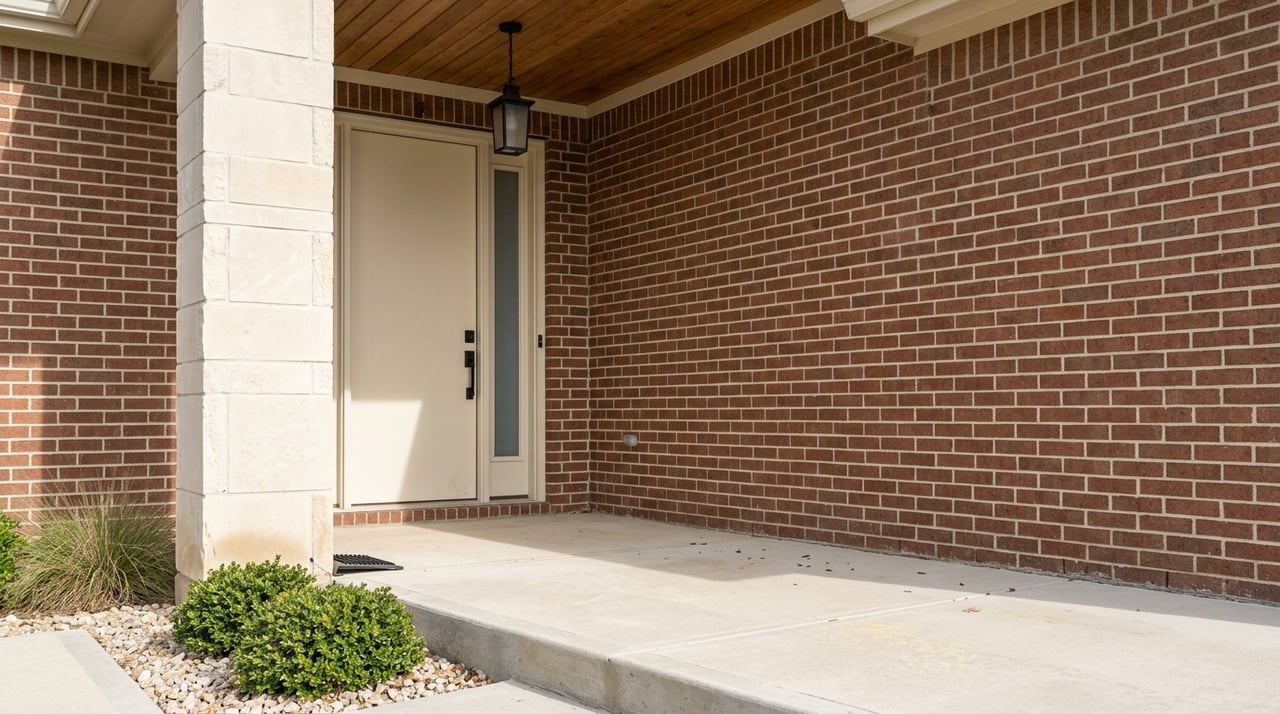
Two Forney homes list at $385,000. Same square footage, same builder, same granite. One sits inside a Municipal Utility District. The other doesn't. The monthly payments come out roughly $290 apart. Nothing on the builder's financing worksheet explains why.
That gap is the story of buying new construction in Forney right now. The city's median sale price has been drifting through the mid-$300s, and the DFW region's median sat at $335,000 in April 2026 according to the Texas Real Estate Research Center's June report. Under those flat-looking numbers, the effective tax burden on a Forney address can swing from about 1.94% of value to well past 2.30% depending on which special district drew the lot lines. If you are comparing Devonshire against Gateway Parks against Travis Ranch by price per square foot alone, you are comparing the wrong number.
The number that isn't on the builder's sheet
A builder's estimated payment sheet almost always uses the base city, county, and school tax rate. It rarely folds in the extra taxing entity that funded the roads, the drainage, the water lines, and the amenity center you just toured. In Forney that entity is usually a Municipal Utility District, a Public Improvement District, or a Municipal Management District. Sometimes it's more than one.
MUDs are political subdivisions that levy a property tax at whatever rate the district's board sets each year, applied to your full appraised value with no homestead reduction on that portion. PIDs are different animals. According to the City of Forney's official PID page, Forney's PIDs use a fixed assessment allocated to each lot to pay for roads, water lines, wastewater collection, drainage, landscaping, trails, parks, and entry monuments. That fixed assessment can be paid off in full at any time through the city's Finance Department, which is a lever most buyers never learn about until closing has already priced it into their loan.
The mechanism matters because it explains the price. Master-planned communities built on raw land outside existing city utilities almost always need a MUD or PID to finance the infrastructure. The developer fronts the money, the district reimburses the developer through decades of assessments, and the buyer pays it off through the tax bill.
What actually stacks on a Forney tax bill
The Kaufman Central Appraisal District publishes every taxing entity that can appear on a Forney property's bill. The 2025 rate sheet, filed on the Kaufman CAD site, lists the specific numbers.
| Taxing entity | 2025 rate per $100 |
|---|---|
| Kaufman County | $0.2777 |
| City of Forney (FY 2026 adopted) | $0.421431 |
| Forney ISD I&S (max allowed) | $0.5000 |
| Forney MMD #1 | $0.3500 |
| Spradley Farms PID | $0.5400 |
| Las Lomas MUD 4A | $1.0000 |
| Ledbetter MUD 1 | $1.0000 |
| KC WCID #1 | $0.5950 |
The Forney FY 2026 city rate of $0.421431 comes straight from the city's adopted budget document, which also notes Forney's tax base grew 4.5% year over year, the smallest gain since FY 2014. Forney ISD carries the maximum $0.50 Interest & Sinking rate because the district has been building schools as fast as students arrive. The Texas Comptroller's Kaufman County directory lists every additional freshwater supply district, MUD, and PID that can be layered on a Forney or Kaufman County address, from Kaufman County FWSD #1-B, 1-C, and 1-D to Fox Hollow PID #1 to Forney MMD #1.
Same list price, very different monthly payment
Run the math on a $385,000 new build with a $100,000 homestead exemption applied to the school portion.
A Forney home inside city limits, in Forney ISD, with no MUD or PID: county, city, and ISD rates combine into an effective bill somewhere near 1.94% of appraised value. Roughly $7,470 a year, or about $623 a month escrowed for taxes alone.
The same $385,000 home in a subdivision served by a MUD carrying a $1.00 per $100 rate: that MUD tax adds $3,850 a year on top, calculated on the full appraised value with no homestead offset on the MUD portion. New total lands near $11,320 a year, or about $943 a month. The delta is $320 a month. Over the first ten years that's roughly $38,000 out of pocket.
A PID lot from a community like Spradley Farms behaves a little differently. The $0.54 assessment is fixed against the lot rather than floating with appraised value, so future appreciation doesn't automatically enlarge the assessment. The tradeoff is that the PID balance can also be paid off in full through the city, which turns a monthly drag into a closing decision if the buyer has the cash and the seller is willing to negotiate around it.
Where the districts actually sit
Naming names matters because Forney's growth is not spread evenly across taxing districts. A partial map of what's underneath the marketing:
- Devonshire. A 920-acre master-planned community east of Lake Ray Hubbard, developed with Bloomfield, Highland, and Perry Homes among the builders. Utility service for Devonshire is documented on the Forney EDC infrastructure page, which identifies Atmos as the gas provider for Devonshire MUD. Confirm the exact MUD number at the appraisal district before writing an offer.
- Windmill Farms. East side of Forney, gas service through CoServ. Kaufman County Freshwater Supply Districts 1-B, 1-C, and 1-D sit under this community, each with its own board meeting schedule and its own annual rate order.
- Gateway Parks. A 2,000-plus-acre development along Gateway Boulevard. Verify whether a specific phase falls inside Forney MMD #1, which levies $0.35 per $100 on top of the base stack.
- Travis Ranch. In unincorporated Kaufman County territory served by its own freshwater supply district, which changes the city tax question entirely.
- Spradley Farms. Listed on the KCAD rate sheet as a $0.54 PID, meaning a fixed-assessment community rather than a variable-rate district.
The Forney Chronicle reported that more than 3,000 new housing permits were issued in Forney in 2024, with Gateway Parks, Devonshire, Overland Grove, and Windmill Farms expansions among the active developments. Every one of those permits landed inside some taxing configuration a buyer needs to verify.
The four-minute check before you sign anything
- Pull the address on the Kaufman Central Appraisal District property search. The account detail page lists every taxing jurisdiction attached to the parcel.
- Add every jurisdiction's rate together using the current year's KCAD rate sheet. That total, applied to appraised value, is your real tax number. Compare it against the number on the builder's financing worksheet.
- If a PID appears, request the PID Service and Assessment Plan from the City of Forney Finance Department. It shows the remaining assessment balance, the annual payment schedule, and the payoff amount.
- Ask the title company for the tax certificate before the option period ends. Texas Property Code Section 5.014 already requires PID notice disclosure in most contracts, but the tax certificate is where the numbers get real.
What this means for your offer
The interpretation is simpler than the math. In a market where DFW median seller price reductions were running $12,500 or about 3% of list price through April 2026, according to the Texas Real Estate Research Center, a MUD gap between two otherwise identical communities is often larger than any concession you will negotiate on price. That means the highest-leverage decision a Forney buyer makes is not what to offer. It's which subdivision to shop in the first place.
For a buyer targeting a specific monthly payment ceiling, a lower-priced home inside a high-rate MUD can carry the same total cost as a higher-priced home outside one. For a buyer planning to hold ten years or more, a fixed PID assessment with a payoff option behaves very differently on resale than an open-ended MUD rate that the district's board can revisit annually.
Sellers on the other side of this equation should assume any well-prepared buyer's agent is running the same math. A listing inside a high-rate district needs sharper pricing, cleaner condition, or a stronger amenity story to compete against a listing across the street in a plain-vanilla tax configuration.
Quick answers
Do MUD taxes ever go away? They can, at least in theory. A MUD tax is designed to fall as the initial infrastructure bonds get repaid, and the district disappears entirely if the city annexes the MUD and absorbs the debt.
Are PID assessments tax-deductible? Fixed PID assessments are structured as special assessments against the property. Talk to your CPA about how the payment is treated on your specific return. This post is not tax advice.
How do I know if a resale home is in a MUD or PID? Texas law requires sellers to deliver statutory MUD and PID notices at or before contract. If a notice appears, take it seriously and pull the underlying documents from the district or the city.
Choosing between Devonshire, Windmill Farms, Gateway Parks, Travis Ranch, or any of the newer Forney communities comes down to the numbers a portal search will never show you. If you want the full tax stack pulled and interpreted on the specific addresses you are considering, or if you are preparing to sell inside one of these districts and want a pricing strategy that accounts for the buyer's real monthly cost, The Cole Home Team can walk through it with you. Request a Free Home Valuation to start the conversation.