Table of Contents
- Why Kaufman County Keeps Attracting Buyers From the Metroplex
- What Growth Actually Looks Like in Forney, Terrell, and Kaufman
- The New Construction Question
- Population Growth Brings Infrastructure Pressure
- What Sellers Should Understand About This Market
- Property Taxes: The Number That Changes the Math
- What Living Here Actually Feels Like
- Practical Guidance for Buyers and Sellers Considering a Move
- Thinking About Buying or Selling in Kaufman County?
Kaufman County added more than 11,000 residents between June 2024 and July 2025, a 5.6 percent increase that placed it third in the nation for percentage population growth, according to WFAA’s April 2026 report citing Census Bureau data. That is not a blip. It is a sustained demographic shift that is reshaping what buyers can afford, what sellers can expect, and what the communities east of Dallas look like from one year to the next.
If you are thinking about buying, selling, or relocating in this part of North Texas, understanding the forces behind that growth matters as much as knowing the listing price. This article breaks down what is actually driving Kaufman County real estate, where the opportunities are, and what the tradeoffs look like on the ground.
Why Kaufman County Keeps Attracting Buyers From the Metroplex
The short answer is price. A buyer priced out of Frisco, Plano, or even Mesquite can often find a four-bedroom home with a yard in Forney or Terrell for considerably less money. That gap has narrowed over the past two years, but it has not closed.
As of August 2026, the median list price in Kaufman, TX was $395,745, up from $386,000 in 2025, according to Movoto’s Kaufman market trend data. That is a meaningful increase, but it still represents significant value relative to communities closer to the Dallas core. The county’s median listing price rose 11.26 percent year-over-year as of September 2026, per Realtor.com’s Kaufman County housing market data.
Beyond price, buyers are drawn by land. Kaufman County still has acreage-ready properties, rural lots, and smaller-town communities where a half-acre or more is a realistic expectation rather than a luxury upgrade. That combination of relative affordability and space is difficult to find this close to a major metro.
Kaufman County ranked third in the nation for percentage population growth from June 2024 to July 2025, adding over 11,000 residents in a single year. That pace of growth changes what buyers find when they search and what sellers face when they price.
What Growth Actually Looks Like in Forney, Terrell, and Kaufman
Each of the three main communities in Kaufman County is growing differently, and those differences affect real estate decisions in specific ways.
Forney
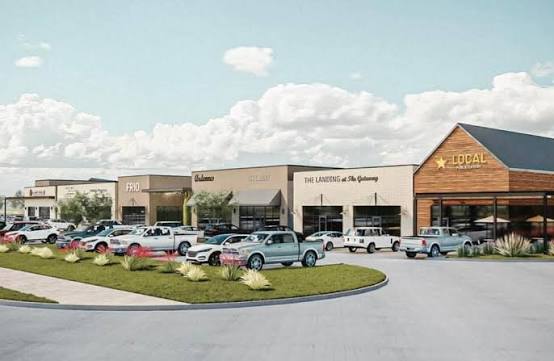
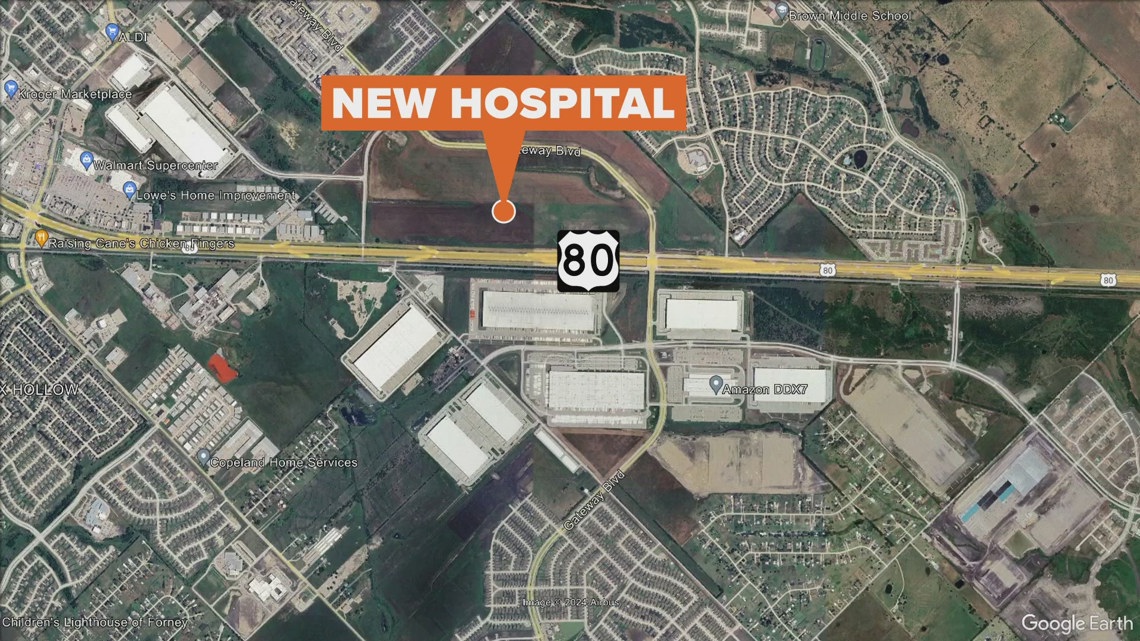
Forney sits on US-80 roughly 20 miles east of downtown Dallas, which makes it one of the more accessible communities in the county for commuters. New construction subdivisions have expanded steadily along the corridors east of town, and retail development has followed. The Village at Gateway shopping center has added tenants, and the surrounding area continues to see commercial investment.
Buyers in Forney need to pay close attention to property tax structures. Many newer subdivisions carry Municipal Utility District (MUD) or Public Improvement District (PID) assessments that add to the base tax rate. These assessments fund infrastructure, but they can add hundreds of dollars per month to a mortgage payment that looked manageable on paper. Our breakdown of Forney MUD and PID taxes in new construction covers exactly how to read those numbers before you make an offer.
Terrell
Terrell is roughly 30 miles east of Dallas on I-20 and has historically offered lower price points than Forney. That is shifting. A nearly 934,000-square-foot Amazon fulfillment facility on Airport Road is bringing jobs and attention to the area, which tends to compress the affordability advantage over time. Buyers who move quickly can still find value; buyers who wait may find a different market.
Terrell also has a functioning historic downtown with local businesses, which gives it a character that many newer master-planned communities lack. For some buyers, that matters more than a community pool and a fitness center.
Kaufman
The city of Kaufman is the county seat and sits about 35 miles southeast of Dallas. It has a more established feel than the rapidly developing corridors along US-80 and I-20. New construction is available, but the market also includes older homes on larger lots, which appeals to buyers looking for something with history rather than a builder-grade finish package.
The New Construction Question
A large share of Kaufman County real estate activity involves new construction, and that creates a specific set of considerations for buyers.
Builders in this market are active and competitive. Many offer interest rate buydowns, closing cost assistance, or design center credits to move inventory. Those incentives can be valuable, but they are structured to benefit the builder’s bottom line as much as the buyer’s. Having an independent agent review the contract before you sign matters.
There are also practical tradeoffs between new construction and resale that buyers should weigh honestly:
- New construction typically comes with builder warranties, but warranty coverage varies significantly between builders and is not a substitute for a thorough inspection.
- Resale homes in established neighborhoods often have mature landscaping, finished-out yards, and no MUD or PID assessments layered on top of the base tax rate.
- New construction timelines can stretch, and locking a rate for a home that closes six months later requires a different financing strategy than a standard resale purchase.
- Some new subdivisions are still surrounded by undeveloped land, which means the neighborhood’s character will continue to change for years after you move in.
Neither option is universally better. The right choice depends on your priorities, your timeline, and your tolerance for uncertainty during the build process.
Population Growth Brings Infrastructure Pressure
Rapid growth creates real strain on roads, schools, and public services. Kaufman County is not immune to that pressure. Some communities have seen school enrollment outpace facility capacity, and traffic on key corridors like US-80 can be slow during peak commute hours.
Infrastructure investment is ongoing, but it typically lags population growth by several years. Buyers relocating from denser urban areas sometimes underestimate how different the commute experience can be when road expansion has not kept pace with development.
Our earlier analysis of where Dallas-area population growth is actually concentrated provides useful context here. The 2026 Census data showed Dallas County losing residents while Kaufman County grew nearly six percent. That outflow has real consequences for infrastructure demand in the communities absorbing it.
For buyers, the practical question is not just whether a community is growing, but whether the roads, schools, and services you depend on are keeping pace. That requires specific research, not just a general assumption that growth equals improvement.
What Sellers Should Understand About This Market
Sellers in Kaufman County real estate are in a generally favorable position, but the market is more nuanced than a simple “sell now” story.
Demand from Dallas-area buyers remains consistent, particularly for move-in-ready homes priced realistically. Buyers in this market are often comparing multiple options across Forney, Terrell, Kaufman, and adjacent communities, and they are doing that comparison carefully. Overpriced listings sit. Well-prepared, accurately priced homes move.
A few factors sellers should account for before listing:
- New construction is direct competition. If a buyer can get a new home with builder incentives for a similar price, your resale needs to offer something the new build does not, whether that is location, lot size, established landscaping, or a lower effective tax rate.
- Appraisals in rapidly appreciating markets can be unpredictable. A price that feels supported by recent comps may not survive the appraisal process if the comparable sales pool is thin.
- Buyers relocating from higher-cost markets may have strong purchasing power but also high expectations for condition and presentation. First impressions matter at every price point.
Property Taxes: The Number That Changes the Math
Property taxes in Kaufman County vary significantly depending on the specific taxing entities that apply to a given property. The county rate is one component, but city rates, school district levies, MUD assessments, and PID fees stack on top of it. The total effective rate can differ by more than a full percentage point between two homes that are half a mile apart.
This is not a minor detail. On a $400,000 home, a one-percentage-point difference in the effective tax rate equals $4,000 per year, or roughly $333 per month added to your housing cost. That is enough to shift whether a home is affordable or not.
Anyone researching a move to Kaufman County should pull the specific tax roll for any property they are seriously considering, not just accept the estimate provided by a listing sheet or an online calculator. Our guide to moving to Kaufman County, TX covers this and other practical considerations for people making the transition from the metroplex.
What Living Here Actually Feels Like
Growth statistics describe a market. They do not describe a place. Kaufman County still has a slower pace than the core DFW suburbs, and that is part of the appeal for many buyers. Smaller downtowns, less traffic outside peak hours, and communities where neighbors tend to know each other are real features of daily life here.
That said, the county is changing. Kaufman and Forney both have more retail and dining options than they did five years ago. New subdivisions bring new residents who have different expectations for amenities and services. The rural-suburban balance is shifting, and buyers who moved here specifically for the quiet may find their neighborhood looks different in ten years.
For a grounded look at what daily life in the area involves, our post on what it is like to live in Kaufman, TX covers the practical side of that question honestly.
Practical Guidance for Buyers and Sellers Considering a Move
Whether you are buying or selling in Kaufman County real estate, a few principles hold regardless of market conditions:
- Verify the full property tax stack, including any MUD or PID assessments, before making a financial commitment.
- Understand the commute before you commit. Drive the route at the time of day you would actually be commuting, not on a Saturday afternoon.
- Compare new construction and resale on total cost of ownership, not just list price. Builder incentives can offset some costs, but not always the ones that matter most.
- Research school district boundaries carefully. Boundaries in fast-growing areas can shift, and the school your neighborhood feeds into today may not be the same one in three years.
- Price realistically. Whether buying or selling, accurate pricing based on current closed sales, not wishful thinking, produces better outcomes.
Thinking About Buying or Selling in Kaufman County?
Kaufman County real estate is not a simple market to read from the outside. The growth numbers are real, the demand from Dallas-area buyers is real, and the affordability advantage, while narrowing, still exists. But the details matter enormously: which subdivision, which tax district, which school zone, which builder, and which price point relative to current closed sales.
Robert and Mandy Cole and The Cole Home Team are based in Terrell and work throughout Kaufman County, including Forney, Kaufman, and the surrounding communities. If you have questions about a specific neighborhood, a builder’s reputation, or what a realistic price looks like for a home you are considering, reach out directly. Plain, specific answers are what we do.
Contact The Cole Home Team through thecolehometeam.com to start a conversation about your next move in North Texas.
Frequently Asked Questions
Why is Kaufman County real estate so attractive to buyers from the Dallas metroplex?
Kaufman County attracts buyers primarily due to its relative affordability compared to areas closer to Dallas. While prices have risen, homes in Forney and Terrell are still significantly less expensive than in cities like Frisco or Plano. Buyers also value the availability of larger lots and acreage, which is rare in more developed metro suburbs.
What are the key differences in growth and real estate between Forney, Terrell, and Kaufman?
Forney, located on US-80, sees extensive new construction and commercial development, but buyers must watch for additional MUD and PID assessments on top of property taxes. Terrell, on I-20, is experiencing growth driven by new jobs, which is starting to increase prices, and offers a historic downtown. Kaufman, the county seat, has a more established feel with a mix of older homes on larger lots and new construction.
How do MUD and PID assessments affect new construction costs in Forney?
Municipal Utility District (MUD) and Public Improvement District (PID) assessments in Forney's newer subdivisions are additional charges that fund local infrastructure. These can add hundreds of dollars per month to a buyer's housing cost, significantly increasing the total monthly payment beyond the initial mortgage calculation. It is crucial to understand these before making an offer.
What are the main trade-offs buyers should consider between new construction and resale homes in Kaufman County?
New construction offers builder warranties and modern designs, but resale homes often feature mature landscaping, finished yards, and no additional MUD/PID taxes. New builds can also have unpredictable construction timelines, while resales in established neighborhoods offer immediate move-in and a more stable community character.
How significant are property taxes in Kaufman County, and how do they impact affordability?
Property taxes in Kaufman County can vary significantly, with city, school district, MUD, and PID rates stacking up. A difference of just one percentage point in the effective tax rate on a $400,000 home can mean an extra $4,000 per year, or about $333 per month. This can be a deciding factor in a home's overall affordability.